
Roles in Managing a Wedding
Think of a wedding. Bride, groom, costumes, venue, stage, lights, music, menu, entry, exit, guests,etc…. It is the most expensive high-stakes live theatrical production you will ever throw. You are the star, but who directs the show? Who writes the script, who builds the stage, and who simply makes sure everything falls in place on the D day?
There are many titles Wedding Planner, Coordinator, Consultant, and Designer, which are tossed around wedding forums and somehow these are most misunderstood areas in the wedding industry because many companies use these titles interchangeably as if they all mean the exact same thing. They don’t. In reality, they represent different levels of involvement, responsibility, and expertise. Before you sign them up, you need to know exactly who does what. Here is your definitive guide to the four major roles—and how to decide which one is actually required for you and worth your investment.
1. Wedding Consultant (Advisor / Strategist)
A wedding consultant is primarily a guide and advisor. Basically, the tauji or naaniji in a wedding, who tells you what to do and how to do. This one is the architect who designs a house but doesn’t build it.
What they do
- Help define wedding vision and priorities, facilitating better decision-making
- Create budgets
- Recommend vendors
- Review vendor contracts
- Suggest timelines
- Provide planning advice, giving strategic direction
- Help avoid costly mistakes, helps in cost savings
What they DON’T do
- Don’t execute the wedding
- Don’t manage vendors daily
- Don’t coordinate wedding-day operations
2. Wedding Planner (Project Manager)
A wedding planner manages the entire wedding project from start to finish. That mamaji or chachaji in the wedding, who runs around for everything. A project manager for a construction project, who saves time, reduces stress and keeps everything on schedule and within budget.
What they do
- Budget management
- Vendor sourcing
- Vendor negotiations
- Timeline creation
- Guest logistics
- Meetings and follow-ups
- Contract management
- Event execution oversight
What they DON’T do
- Design the Decor
- Cater to Food
3. Wedding Coordinator (Operations Manager)
A coordinator focuses on execution, just like a stage manager at a live event.
What they do
- Manage wedding day logistics ensuring smooth execution
- Vendor check-ins
- Ceremony flow and controls full operation
- Guest movement
- Troubleshooting and problem solving
- Run-of-show management
What they DON’T do
- Plan the wedding
- Choose the vendors
4. Wedding Designer (Creative Director)
The designer creates the visual and experiential identity of the wedding, just like an interior designer for the house project.
What they do
- Wedding concept giving it an aesthetic differentiation
- Theme development – be it luxury experience or minimalistic
- Mood boards
- Colour palettes
- Decor design
- Spatial planning
- Guest experience design
- Styling
What they DON’T do
- Manage budgets
- Coordinate vendors
- Handle logistics
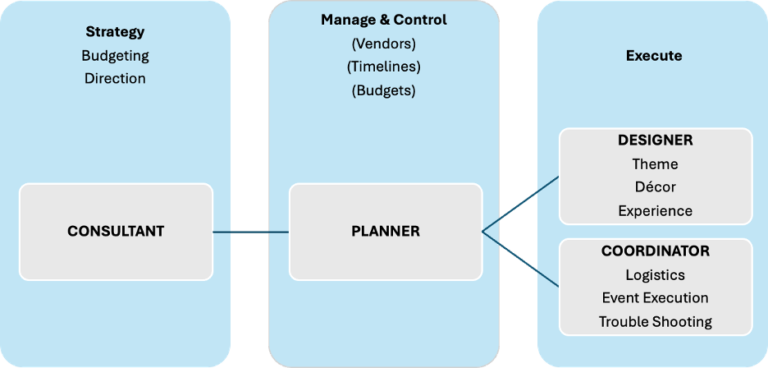
How They Connect
Can Roles Overlap?
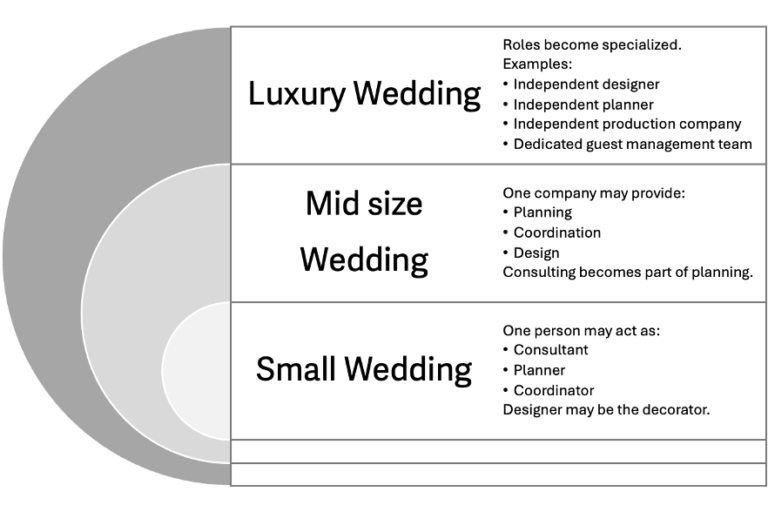
Can One Person Do All Four Roles?
Yes. Many boutique planners do exactly this. However, this becomes difficult as complexity and budgets grow.
When Should Roles Become Separate?
- When the project size and scale is huge
- When wedding budgets are very high
- When the overall event includes multiple sub-events with different decors and exclusive themes yet needs to appear like single event
Separate specialist roles are rarely cost-effective.
What can SAGA Celebrations do for you?
We provide all services – Consultation, planning and coordination
|
Role |
Service |
|
Wedding Consulting |
Strategic advisory |
|
Wedding Planning |
End-to-end project management |
|
Wedding Design |
Concept, mood board, storytelling, guest experience |
|
Wedding Coordination |
Execution and show-calling |
|
Full SAGA Experience |
All four combined |